
Sapporo is Japan’s most famous city in the northern island of Hokkaido. A huge attraction is their scenic parks and beautiful flower gardens.

I’m a man of nature, and when you live in suburban areas like a city slicker, it can feel like Mother Nature is nowhere in sight! That’s why I’m eternally grateful for parks, as they give us a snippet of nature’s beauty while remaining relatively close or even nestled within concrete cities.
During my adventures in Sapporo, I came across many parks that invoked feelings of awe and appreciation for both the natural and man-made world. From stunning displays of lush trees and floral gardens to impressive city views and architectural exhibits, I’ve consolidated my findings into a top 5 list below!
1. Asahiyama Memorial Park
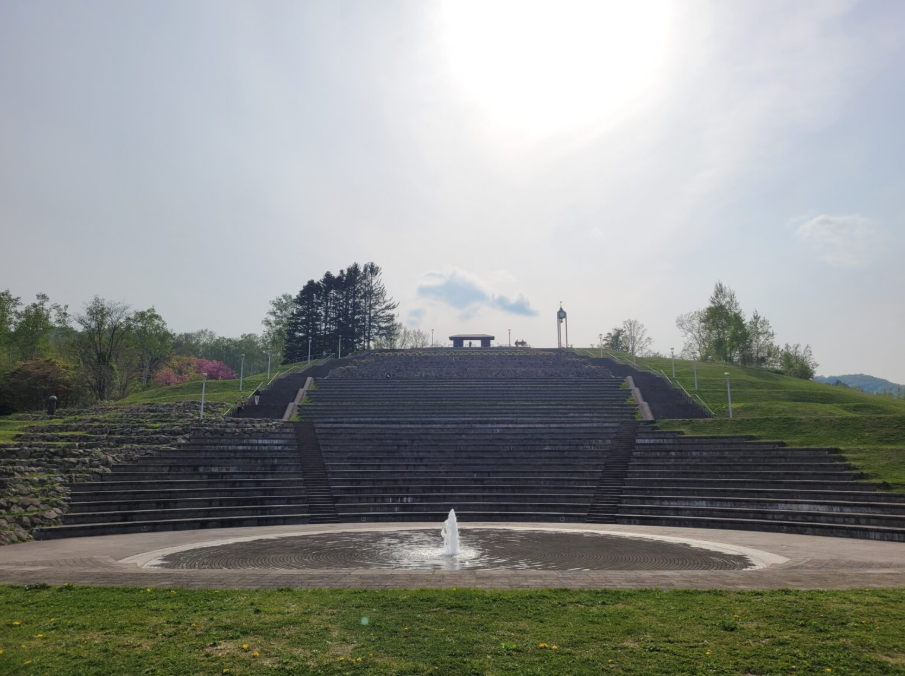
Asahiyama Memorial Park is perhaps the most underrated park in all of Sapporo. It’s certainly not talked about in any of the big travel guides, likely because it’s quite discreet and a bit of a trek to get to. Comprising an uphill incline to arrive at the park’s entrance, only to be met with a massive staircase to the observatory point, it’s no wonder Asahiyama Memorial Park is not well-advertised for tourists. However, if you do manage to soldier on up here (or get a taxi to take you around the back entry), you’ll be met with a beautiful fountain and lookout deck with breathtaking views of Sapporo City!
2. Odori Park
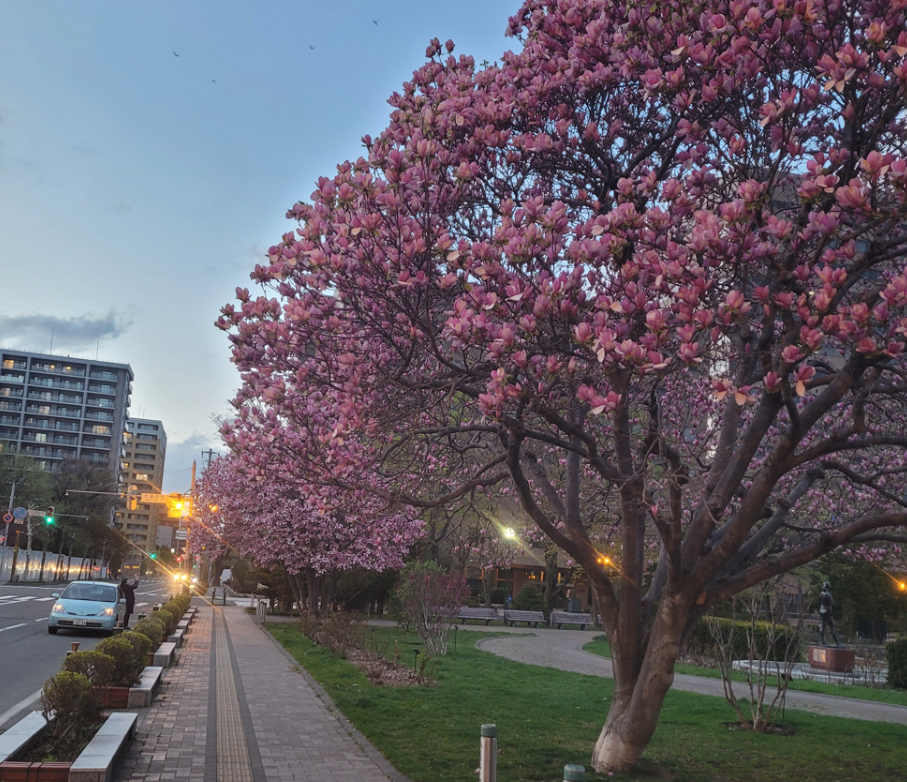
Odori Park is the pride and joy of Sapporo, home to the 1972 Winter Olympics as well as the annual Sapporo Snow Festival. However, even outside of winter, it’s a stunning area with exhibits of colorful flower gardens and bright pink plum blossom trees. The park extends all the way down Odori street toward the big Sapporo TV Tower which lights up brilliantly at night (and tells the time too!). Odori Park always promises a nice vibe, sometimes very quiet and peaceful and other times crowded and chaotic (in the best ways of course), depending on what events are on!
3. Maruyama Park
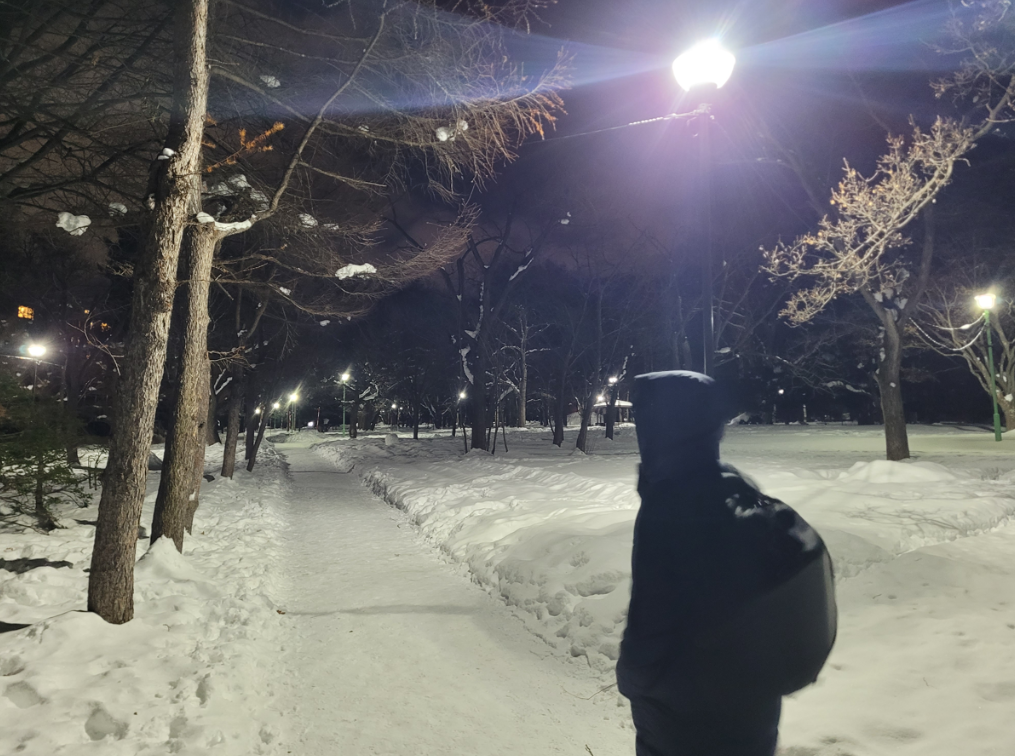
Maruyama Park is one of the most transformative parks I’ve ever seen, taking on entirely different looks based on the season. During spring, it’s a haven of pretty pink cherry blossoms, while the winter blankets the grounds with thick powdery white snow! Personally, I’m a big fan of the snowy vibes at Maruyama Park, particularly at night when the lampposts turn on and the pathways look absolutely magical and enchanting.
4. Hassamu Riverside Park
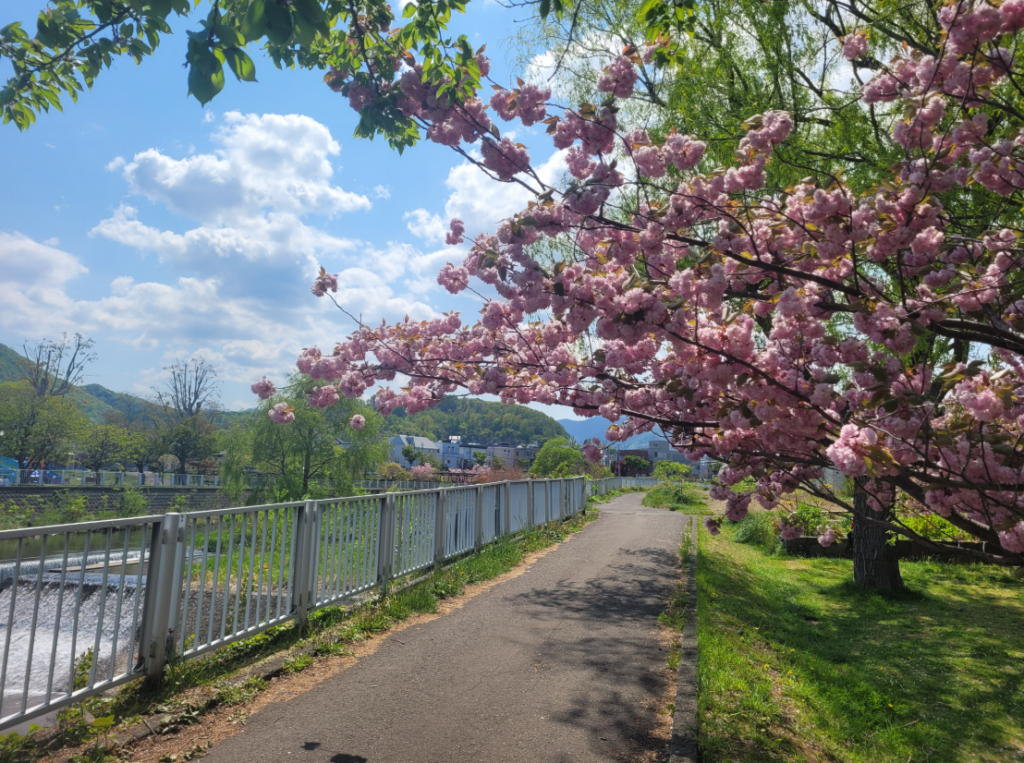
Hassamu Riverside Park is another one of Sapporo’s hidden gems, at least to the eyes of the tourist. The truth is, it’s a beloved destination for the locals, but I was surprised to see its online presence practically non-existent (not to brag, but I was one of the first to publish an article about it!). As such, you probably won’t find too many foreign tourists here, giving you a chance to experience a more authentic part of Sapporo’s natural beauty without the disrupting forces of commercialization and superficiality. The park itself is pretty stunning with spectacular scenery of Hokkaido’s snowy mountains. crystal clear flowing rivers, and lovely green gardens and spring cherry blossoms!
5. Nakajima Park
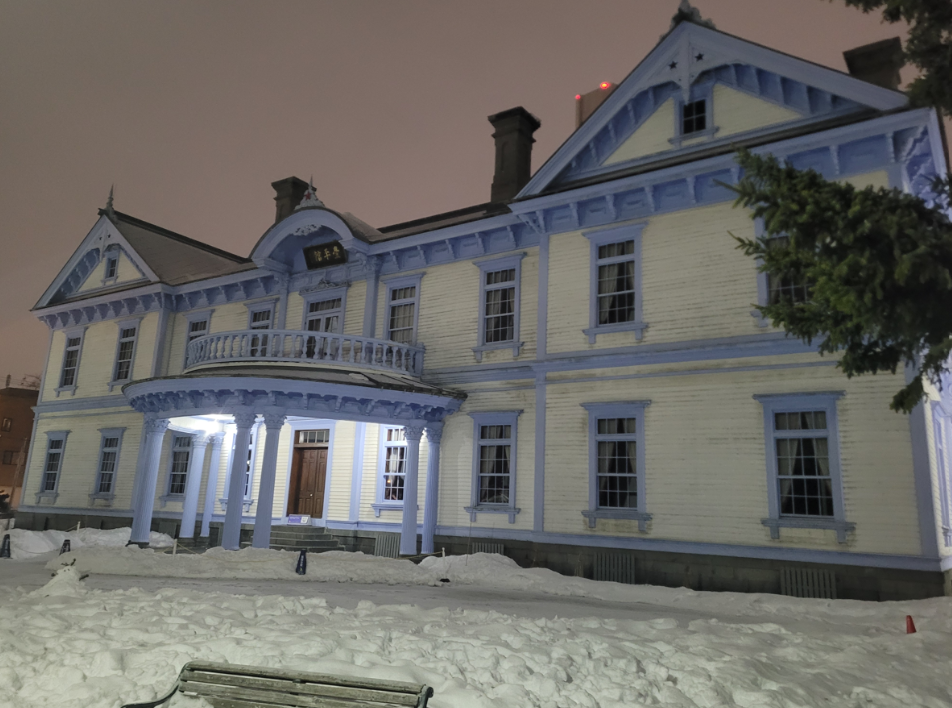
Nakajima Park is, dare I say once again, a hidden gem of Sapporo. Well, my idea of “hidden” is that it’s not bustling with tourists, but it certainly is well-known by the local residents. Particularly in winter, the park turns into an enchanting place of beauty that invokes magical, perhaps even romantic feelings for those passing through it. One of its iconic landmarks is the big blue mansion-like house you see in the photo above. Known as Hoheikan, it’s a multi-purpose dwelling that can be reserved for weddings and civic events, and also features cafes and restaurants serving Japanese and French sourced cuisine. As a National Important Property of Japan, it once housed Emperor Meiji during his stay in Sapporo, and has become a symbol of one of the first western-style architectures in Japan.
To learn more about life in Japan, check out my book: The Japanese Pursuit of Perfection. This book features my most profound observations of Japanese culture and society as a foreign resident. Available in e-book, paperback, and hardcover. Grab your copy today!